Unwilling to Expose Her to Shame
Friends, in a world that measures worth by performance and demands that we constantly prove ourselves and virtue-signal our morality, Saint Joseph stands as a quiet but powerful sign of contradiction. He refuses to be shaped by the expectations of his time. As we heard in today’s Gospel Reading, he chooses not to expose Mary to shame. Behind that simple line lies an entire world of pressure, family members, neighbours, and the religious culture of his time would have expected him to defend his honour by publicly naming Mary as an adulteress. After all, how else could she be pregnant? If Joseph had lived by the logic of our world, where virtue is often displayed rather than lived, he would have taken the moral high ground, signalled his righteousness, and allowed Mary to bear the full weight of public shame. But Joseph is a sign of contradiction precisely because he refuses this path. He opts instead for an informal divorce, unwilling, as Matthew tells us, to expose her to shame. In this, Joseph reveals what Matthew means when he calls him a just man. His justice is not retributive but relational. He gives Mary her due not because of what she has done, but because of who she is: a bearer of God’s image. Joseph’s justice is the justice of someone who sees as God sees.
Matthew subtly presents Joseph as one who already embodies the heart of chapter 25 of his Gospel: “Whatever you do to the least of my brothers and sisters, you do to me.” His righteousness is not the righteousness of public opinion but the righteousness of compassion, discernment, and reverence for the mystery of another’s life. It is a righteousness that listens, that waits, that refuses to collapse a person into the rumours that swirl around them. It is a righteousness that wrestles with God in the quiet, seeking truth amid noise and the pressure for quick resolution. The image that best captures Joseph’s righteousness is that of oil resting at the bottom of a large tank of water. At first glance, one might conclude there is no oil at all, simply because it has not yet risen to the surface. Joseph is not in a hurry to draw conclusions. He is willing to wait, to let time reveal what is true. In this image, the oil becomes a symbol of truth—truth that will rise in its own time, truth that Joseph receives only because he gives Mary the benefit of the doubt, and refuses to act prematurely. Justice, in this case, becomes a space in which the other is allowed to come to terms with the reality unfolding within them. Justice becomes hospitality to the truth that is still unfolding, making room for God to act.
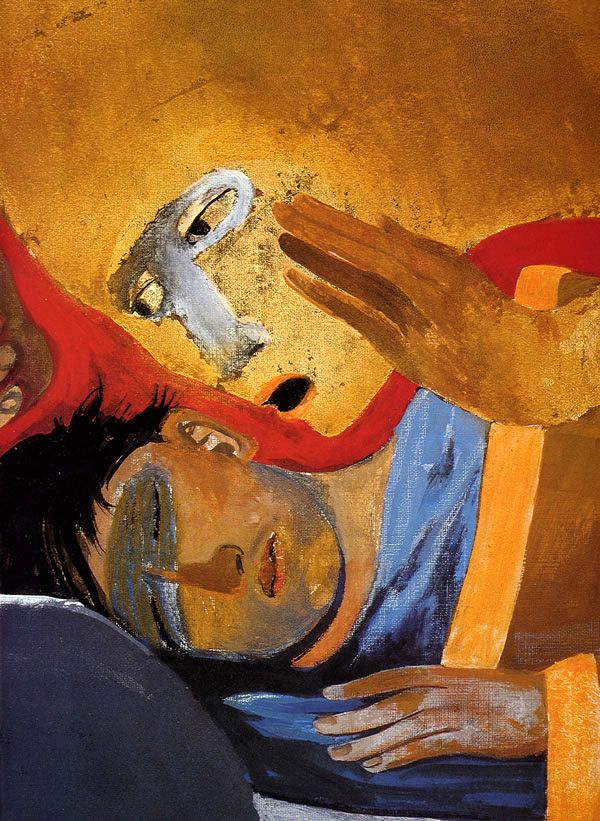
In Joseph, God does act: the angel speaks, the truth rises, and Joseph receives what he could not have grasped had he rushed to judgment: “Joseph, son of David, do not be afraid to take Mary your wife into your home. For it is through the Holy Spirit that this child has been conceived in her. She will bear a son, and you will name him Jesus, because he will save his people from their sins.” Had Joseph bowed to the pressure of his religious culture, had he named Mary an adulteress and exposed her to shame, the consequences for her would have been grave, and the mystery God was bringing to birth in her would have been obscured in human eyes. This is the tragic logic of hurried judgment. It is what happens when we label others and force their story into the categories that make us feel secure. In such cases, we risk hindering the very work of God unfolding in them—and in us. We can only imagine how many families, lives, careers, and even vocations have been torn apart by this mindset, by a culture that demands the constant signalling of virtue, a culture that prizes looking good over being good. But Joseph shows us another way. His justice is the justice of a man attuned to God’s timing; a man whose patience becomes the very place where divine truth is disclosed. It is a justice that places every person in a posture where God can act and make all things right.
Leave a Reply